Germany is a popular choice for Indian students seeking internationally recognised education, specialised programmes and strong career opportunities in Europe. It is particularly well known for fields such as engineering, computer science, IT, business, automotive technology, renewable energy and research.
However, planning to study in Germany from India involves more than selecting a university. Students need to consider academic eligibility, qualification recognition, APS certification, language requirements, tuition and living costs, financial proof, university applications and the student visa process.
The right pathway also depends on your academic background. Students exploring how to study in Germany after 12th may have different requirements from graduates applying for an MS in Germany for Indian students. Similarly, students considering an MBA in Germany for Indian students need to evaluate programme requirements, costs and career outcomes before applying.
This covers the major steps involved in studying in Germany, from choosing a suitable programme and university to preparing for admission, arranging finances, applying for a visa and planning your career after graduation.
Germany offers more than just affordable education. Its strong universities, research ecosystem, industrial base and international study environment make it an attractive option for students who want to build both academic knowledge and practical career skills.
German higher education is known for academic quality, research strength and specialised programmes. Students can choose from a wide range of fields, including engineering, computer science, artificial intelligence, business, life sciences and renewable energy. Germany also has research-focused universities as well as institutions that combine academic learning with practical projects and industry exposure. This allows students to choose an education model that matches their career goals.
One of the main reasons Indian students consider Germany is the availability of many public universities with comparatively low tuition costs. However, students should not assume that studying in Germany is completely free. Semester contributions, accommodation, health insurance, food, transportation and other living expenses still form part of the overall budget. Therefore, when comparing Germany with other study destinations, students should look at the total cost of education and living, not tuition fees alone.
Germany has a strong economy with established industries in automotive, engineering, manufacturing, technology, healthcare, finance and renewable energy. This creates opportunities for students to gain practical exposure through internships, student employment, projects and industry-linked programmes, depending on their course and eligibility. For students planning an international career, studying in a country with such a strong connection between higher education and industry can be a significant advantage.
Germany hosts a large international student community, offering programmes in English and German, with dedicated support services helping newcomers adjust to academic and daily life. Even in English-taught degrees, learning German eases everyday communication and boosts access to internships, jobs and social opportunities. For Indian students, Germany combines quality education, practical exposure, international experience and strong career prospects—provided the chosen course and university truly match their profile.
Germany can be a strong study destination for Indian students, especially for those looking for quality education, practical learning and long-term career opportunities in Europe. However, it is important to check whether Germany matches your academic profile, budget and career plans before applying.

Germany can be a good option for students who Want to study fields such as engineering, IT, computer science, AI, business, automotive or renewable energy.Prefer academically strong universities with practical or research-oriented learning Are looking for comparatively affordable public university options. Are comfortable studying in English or willing to learn German for better integration and career opportunities. Want to build international work experience after completing their studies. Students with clear career goals and a willingness to manage the application, financial and visa requirements carefully are generally better prepared for the German education system.
Germany is not simply about low tuition fees. Students should also consider living costs, semester contributions, health insurance, financial proof, APS certification, language requirements and university-specific admission criteria. Academic qualification recognition is another important factor. The eligibility for a Bachelor’s, Master’s or other programme can differ depending on your previous education and the university. Before applying, Indian students should therefore compare the course curriculum, admission requirements, total cost, location, language and career opportunities rather than choosing a university based only on rankings or low fees.
Germany has different types of higher-education institutions and understanding the difference is important before choosing a programme. The best option depends on whether you prefer research, academic study, practical training or a specific technical field.
Public universities offer a wide range of Bachelor's and Master's programmes and are particularly strong in academic and research-oriented education. Many programmes have relatively low tuition costs, although students generally need to pay a semester contribution and cover their living expenses.
Universities of Applied Sciences, often known as Fachhochschule (FH) or Hochschule, focus strongly on practical and application-oriented education. Projects, internships and industry-related learning can make these institutions suitable for students who want to develop job-focused skills.
Private universities usually charge higher tuition fees but may offer professionally focused programmes, smaller learning environments and a strong international orientation. Quality and outcomes vary by institution, so students should check accreditation, curriculum, faculty and career opportunities before applying.
Technical Universities, commonly called Technische Universität (TU), are particularly recognised for engineering, computer science, natural sciences and technology-related research. They can be a strong choice for students with technical academic backgrounds who want advanced study or research opportunities.
| Factor | Public Universities | Private Universities |
|---|---|---|
| Tuition | Usually lower | Usually higher |
| Focus | Academic & research-oriented | Often professionally oriented |
| Programmes | Broad range | Varies by institution |
| Best for | Students prioritising academic value and lower tuition | Students seeking specific programmes or professional orientation |
Germany offers different study pathways depending on your current qualification, academic background and career goals.
Bachelor's programmes are available in fields such as engineering, computer science, business, sciences and social sciences. Indian students should first check whether their Class 12 qualification provides direct university entry or whether a preparatory route such as Studienkolleg is required.
Germany offers a wide range of specialised Master's programmes , including engineering, IT, data science, business and renewable energy. For an MS in Germany for Indian students, universities generally assess the previous Bachelor's degree, relevant subjects, credits and programme-specific requirements.
MBA programmes focus on management, leadership and business skills. Requirements vary between institutions, with some programmes considering professional experience. Students should compare curriculum, accreditation, total cost and career relevance before choosing an MBA.
Germany provides research opportunities across engineering, technology, natural sciences, medicine, economics and social sciences. PhD applicants generally need a relevant academic background and may need to find a suitable research topic, supervisor or doctoral position.
Students who do not qualify for direct university entry may need a Studienkolleg, depending on their previous qualification and chosen field. Therefore, students researching how to study in Germany after 12th should verify their individual admission pathway before applying. Vocational routes such as Ausbildung follow a different system and are outside the main higher-education focus of this guide.
| Study Area | Popular Specialisations |
|---|---|
| Computer Science, IT & AI | Computer Science, Data Science, Artificial Intelligence, Software Engineering |
| Engineering & Automotive | Mechanical Engineering, Electrical Engineering, Automotive Engineering, Industrial Engineering |
| Business & Finance | Business Administration, Finance, Economics, International Business, Management |
| Renewable Energy & Sustainability | Energy Engineering, Renewable Energy, Environmental Engineering, Sustainability |
| Life Sciences | Biotechnology, Bioinformatics, Life Sciences, Molecular Sciences |
| Architecture & Social Sciences | Architecture, Urban Planning, Design, Sociology, International Studies |
| University | Strong Study Areas | Type | Location | Cost for Indian Students |
|---|---|---|---|---|
| TUM | Engineering, CS, AI, Technology, Management | Public | Munich | Tuition generally applies to many non-EU programmes |
| LMU Munich | Sciences, Medicine, Business, Social Sciences | Public | Munich | Check programme-specific fees and semester contribution |
| RWTH Aachen | Engineering, Automotive, Technology, CS | Public | Aachen | No general tuition fee; semester contribution applies |
| Heidelberg University | Medicine, Life Sciences, Sciences, Research | Public | Heidelberg | Check applicable tuition and semester contribution |
| KIT | Engineering, CS, Technology, Sciences | Public | Karlsruhe | Non-EU tuition rules may apply |
| University of Mannheim | Business, Economics, Management, Social Sciences | Public | Mannheim | Check programme-specific fees and semester contribution |
Note
Tuition fees and semester contributions can vary by university, programme and student status. Indian students should always verify the current fee structure and admission requirements on the university's official website before applying.
For Indian students, compare these factors before finalising a university:
Takes under a minute · No cost, no obligation
Your details have been submitted. Our counsellor will reach out to you shortly.
Indian students applying for higher education in Germany generally need an APS certificate when it is applicable to their study and visa pathway. APS verifies academic documents and is an important part of the Germany admission and visa process for applicable applicants.
Language requirements in Germany depend on whether your chosen programme is taught in English or German. Students should always check the exact language requirement of their selected course before applying.For Indian students, compare these factors before finalising a university:
Many international and postgraduate programmes are taught entirely in English. Indian students may need to provide an accepted English proficiency test such as IELTS or TOEFL. The required score varies by university and programme, so there is no single IELTS score applicable to every course.
German-taught programmes generally require proof of German language proficiency. Requirements can range from A1 to C1, depending on the programme, although university-level courses commonly require an advanced level. Common recognised examinations include TestDaF and DSH.
IELTS and TOEFL are mainly used to demonstrate English proficiency, while TestDaF and DSH assess German proficiency. The CEFR levels A1–C1 indicate increasing German language ability. Even for an English-taught degree, learning German can be useful for everyday communication, internships and future employment in Germany.
| City | Approx. Monthly Cost | Cost Level |
|---|---|---|
| Munich | €1,200–€1,500 | High |
| Frankfurt | €1,100–€1,400 | High |
| Hamburg | €1,000–€1,200 | Moderate–High |
| Berlin | €950–€1,200 | Moderate |
| Aachen | €800–€1,000 | Moderate |
| Leipzig / Dresden | €750–€950 | Lower |
Note
These are approximate monthly living-cost ranges. Actual expenses vary depending on accommodation, lifestyle, location and personal spending.
Applying to a German university involves several steps and requirements can vary by university and programme. Indian students should start the process early, especially because APS verification, document preparation and university deadlines can take time.
Start by identifying a programme that matches your academic background and career goals. Check the course language, curriculum, duration, intake and career relevance before making a decision.
Compare universities based on programme quality, admission requirements, location, tuition or semester fees, living costs and career opportunities. Always check the university’s official programme page for the latest requirements.
Review the academic requirements carefully, including your previous qualification, subjects, grades, credits and language requirements. Indian students should also check whether their qualification provides direct admission or requires an additional pathway such as Studienkolleg.
For applicable Indian applicants, APS certification is an important part of the Germany study process. Prepare academic certificates, transcripts, passport details, language certificates and other programme-specific documents well in advance.
Depending on the university, applications may be submitted directly through the university portal or through uni-assist. Follow the exact application procedure, document format and deadline specified by the university.
ome universities require a VPD (Vorprüfungsdokumentation) from uni-assist before the university application can be completed. Check whether your chosen programme requires a VPD and allow additional processing time.
After the university reviews your application, you may receive an admission letter if you meet the programme requirements. Once admitted, you can move forward with financial arrangements, accommodation planning and the German student visa process.
Indian students who receive admission to a German university generally need to complete the appropriate student visa or residence process before travelling to Germany. Requirements can vary depending on the applicant and study programme.
You normally need a valid passport, university admission or relevant study documentation, proof of sufficient funds, health insurance and other required visa documents. Financial proof may be demonstrated through a blocked account or another accepted form of funding, depending on the current visa rules.
Prepare your admission letter, APS certificate where applicable, academic documents, passport, financial proof, health insurance and completed visa forms. Submit the application through the appropriate German visa application channel and attend the required appointment or verification process.
Applying without checking the latest visa requirements Incomplete or inconsistent documents Incorrect financial proof Ignoring APS requirements where applicable Waiting too close to the university start date Always check the latest requirements from the German mission in India before submitting your visa application.
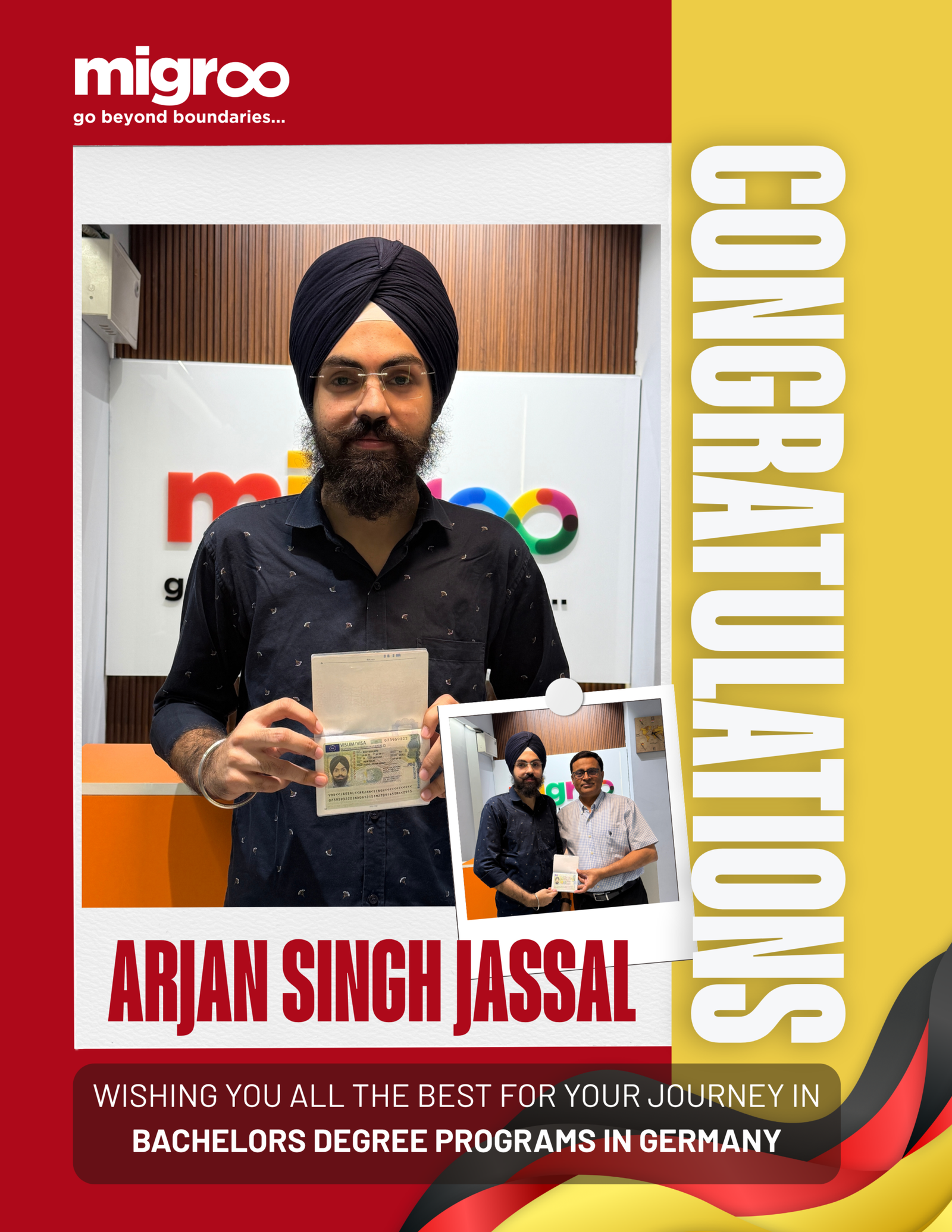
Planning to study in Germany involves multiple steps, from selecting the right programme to preparing applications, APS documentation and visa requirements. Migr8 helps Indian students understand these steps and organise their study-abroad journey based on their academic profile and goals.
The document list depends on the university, but Indian students may commonly need:
Embark on your journey to study in Germany with Migr8, where your dreams are our priority. Join us in Delhi, India, and take the first step towards achieving your academic and global ambitions.
Yes. Germany can be a strong option for Indian students because of its recognised universities, strong research environment, industry opportunities and comparatively affordable public-university study options. However, students should consider eligibility, finances, language and career goals before applying. Migr8 can help students evaluate whether Germany is suitable for their profile.
Students need to budget for tuition where applicable, semester contributions, accommodation, food, insurance, transportation and other living expenses. For the 2026 visa financial requirement, students generally need to demonstrate €11,904 for one year, subject to current German visa rules.
APS is an important academic verification requirement for applicable Indian students planning to study in Germany. The process verifies academic qualifications and documents. Migr8 can guide students through the APS documentation and application process.
Yes, but the admission route depends on your Indian qualification and the requirements of the chosen programme. Some students may qualify for direct Bachelor’s admission, while others may need a preparatory route such as Studienkolleg.
Can Indian students work while studying in Germany?Yes. Germany has many English-taught programmes, particularly at Master’s level. For German-taught courses, proof of German proficiency is normally required. Even when studying in English, learning German can be valuable for daily life and future employment.
Yes, eligible international students can work within the applicable student employment rules. Students can also explore internships and Werkstudent positions related to their field. Part-time income can help with expenses, but students should not depend entirely on it to finance their studies.
Eligible graduates can generally remain in Germany for a limited period to search for suitable employment after completing their studies. With qualifying employment, graduates may move to an appropriate residence status, including the EU Blue Card where requirements are met.
Migr8 provides complete support, including university selection, application assistance, SOP guidance, visa processing, scholarship guidance, and pre-departure support to make your study abroad journey smooth and successful.
Trusted by thousands of successful international students.
Expert guidance from experienced study abroad consultants.
Complete support throughout your study abroad journey.
Helping students achieve their global education goals.
Explore opportunities across Europe and beyond: Germany, France, Italy, Austria, Belgium, Bulgaria, Croatia, Cyprus, the Czech Republic, Denmark, Finland, Georgia, Greece, Hungary, Latvia, Lithuania, Malta, the Netherlands, Poland, Portugal, Romania, Spain, Sweden, Switzerland, Russia, Monaco, and Norway.
UAE/Dubai, Japan, South Korea, China, India, Indonesia, Malaysia, Mauritius, SriLanka, Thailand, Vietnam, Taiwan

+91-9818373900
+91-9871112994
+91-9871112995
hello@migr8.co.in
373, 1st Floor, Kohat Enclave (Near Kohat Metro Station) Pitampura, Delhi – 34
© 2026 Migr8. All Rights Reserved.
This will close in 0 seconds